
Transforming a fragmented, decades-old training catalog into a cohesive, role-based learning ecosystem designed for the era of cloud computing and rapid product change.
The Opportunity
Microsoft had a learning and certification ecosystem spanning decades. It included instructor-led training, Microsoft Virtual Academy (MVA), MOOCs, books, labs, certifications, and partner programs across multiple disconnected destinations.
As cloud adoption accelerated and skills shortages became a critical industry bottleneck, expectations changed. Learners needed absolute clarity: which skills mattered, where to develop them, how to safely practice, and how to prove their expertise. We didn't need another standalone course or website; we needed a connected, multi-year product strategy.
My Role
As the product strategy lead, I authored and socialized a multi-year strategy to unify this ecosystem. The mandate was to connect role-based paths, modular content, the emerging guided model of Microsoft Learn, certification/digital credentials, unified labs, shared services, syndication, and partner learning—all while planning the intentional retirement of legacy destinations.
Audio signal ready
Ecosystem in Conversation
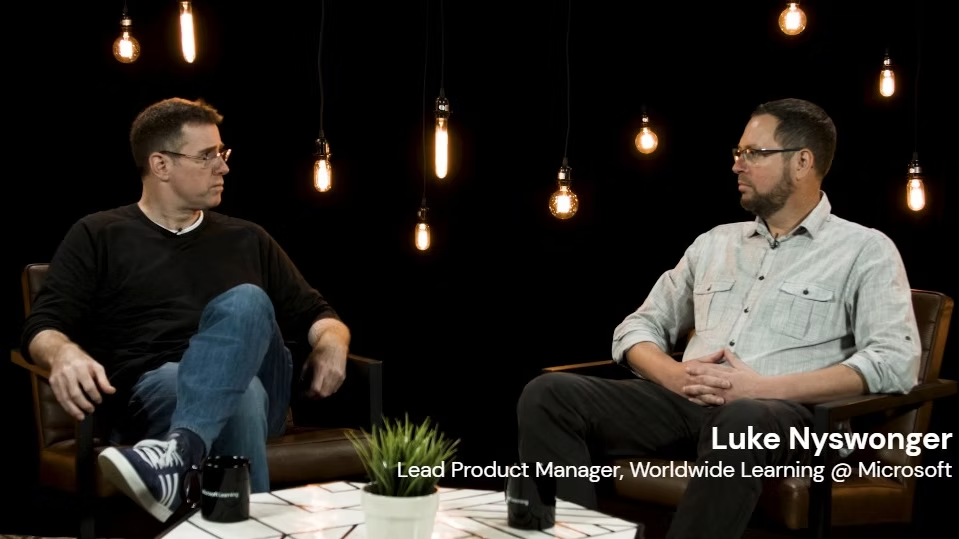
In this discussion, we explore the rationale behind pivoting from product-centered training to a learner-centric, role-based architecture.
The conversation highlights the shift from a broad catalog of training options toward clearer learner journeys, role-based guidance, hands-on practice, and validated credentials.
The Core Architecture
A Blueprint for the Learner Journey
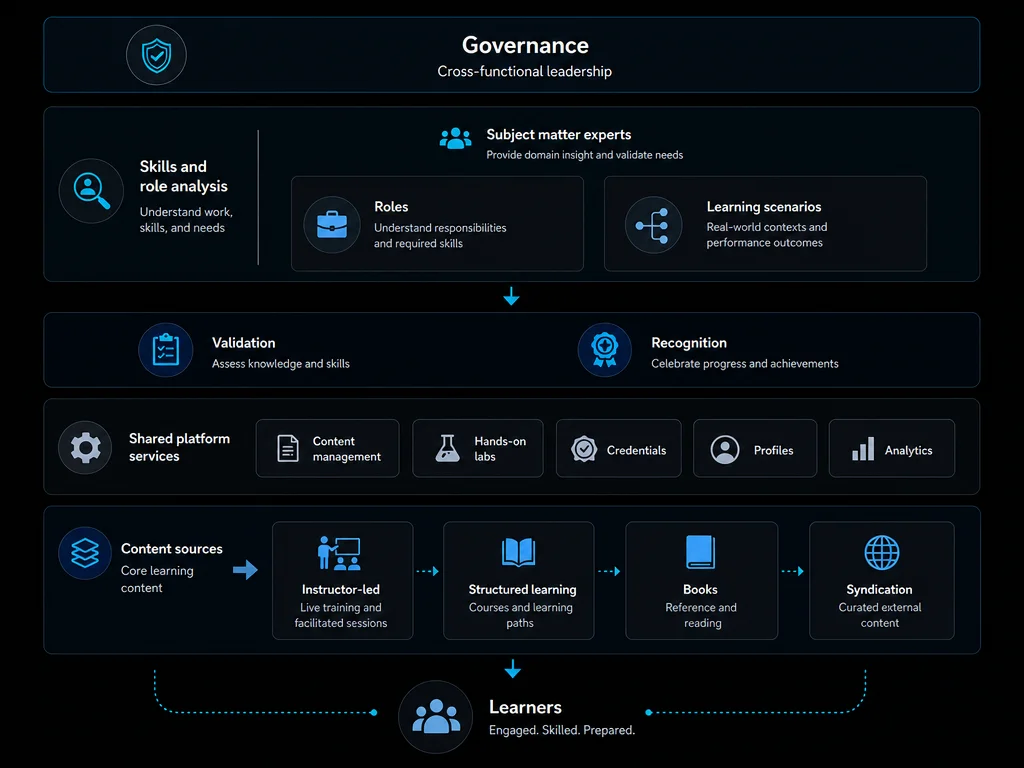
The strategy reimagined the ecosystem around the learner's path to proficiency. Select a stage below to explore the foundational pillars of the strategy.
Job Task Analysis
The ecosystem needed an anchor in reality, not just the product catalog. We used Job Task Analysis (JTA) to define the exact skills required by industry roles. Every learning path, piece of documentation, lab, and credential was then explicitly mapped to these verifiable real-world competencies.
The Transformation
This strategy fundamentally shifted Microsoft’s learning direction from a disconnected, product-centered approach to a role- and skills-based methodology.
Over the subsequent years, elements of this framework were realized globally: structured learning paths became the norm, role-based certifications replaced legacy product exams, achievements and gamification drove engagement, and hands-on experiences were integrated directly into the flow of learning. The fragmented ecosystem successfully consolidated around the modern Microsoft Learn platform.
Lessons Learned
Strategy is systemic
Learning strategy is product and systems strategy. Courses alone are insufficient. Audience definitions, skill frameworks, architecture, practice, assessment, governance, and distribution must work in concert.
Design for the learner
Design the ecosystem around the learner’s journey, not the boundaries of the producer organizations. When internal silos dictate the learning experience, the learner always pays the cognitive tax.