
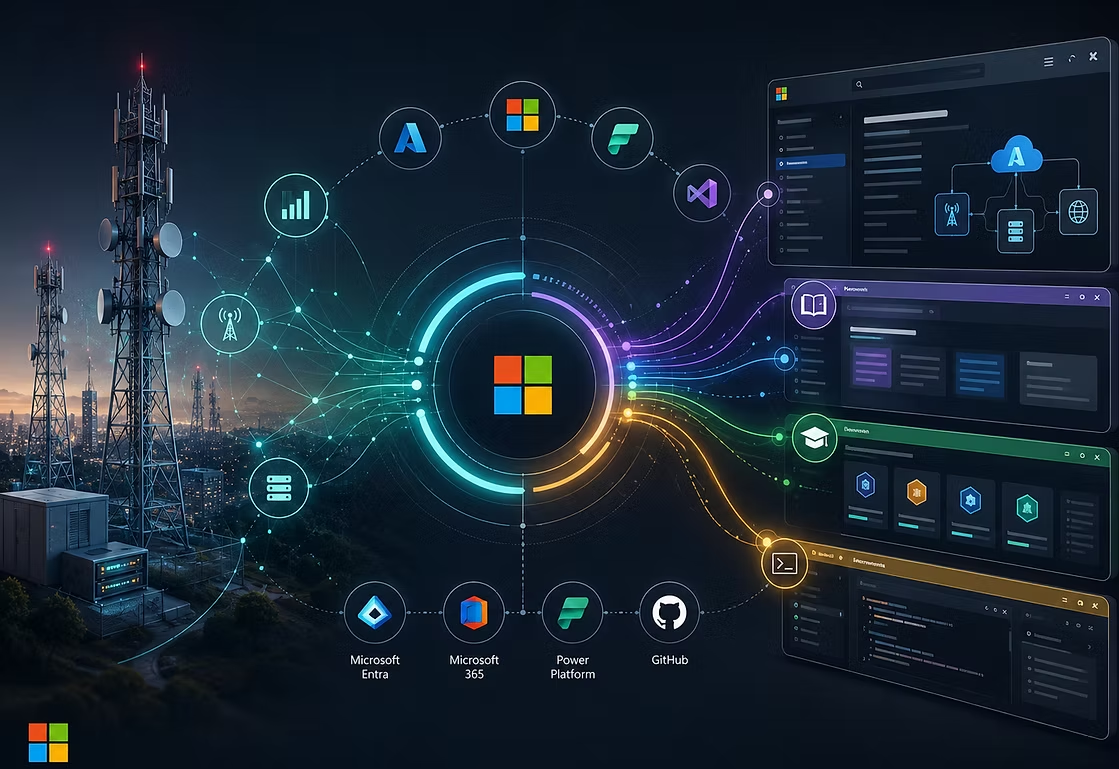
Microsoft’s acquisitions of Metaswitch and Affirmed Networks brought mature telecommunications products, experienced teams, established customers, and deeply embedded ways of working into the Azure ecosystem.
The Opportunity
The acquired organizations used different content systems, publishing models, support practices, and customer-access requirements. Some documentation was public; other material was restricted by customer contracts. Workflows included DITA, PDF, versioned manuals, custom portals, Markdown, GitHub, and Microsoft Learn.
The challenge was not to force both organizations into a standard Microsoft model overnight. We needed to preserve support for existing carrier-grade products and customers while creating a practical path into Microsoft’s documentation, learning, engineering, and business ecosystem.
My Role
I led the integration of the acquired content and learning organizations and managed globally distributed teams across the United Kingdom, India, New Zealand, and the United States. My responsibilities extended beyond migration into team leadership, operating-model design, change management, governance, and cross-company relationship building.
Current-state assessment
Choose the Target State by Context
Select a decision area to see why integration could not be reduced to moving files from one system to another.
Who can see the content?
Customer access
Public Azure guidance could move toward Microsoft Learn, while contract-restricted material needed gated customer access.
Progressive integration
Integrate Without Disrupting Delivery
Establish a public presence
Supported the first Azure for Operators documentation on Microsoft Docs and content for major product and event announcements.
Connect people and systems
Built relationships across engineering, product, legal, marketing, localization, support, and publishing so acquired teams could operate inside Microsoft.
Align content and learning
Brought documentation and structured training into a more connected operating model while respecting their distinct delivery requirements.
Introduce governance gradually
Helped teams adopt Microsoft planning, review, tooling, and decision-making practices without interrupting support for existing customers.
Leading Through Repeated Change
This was a significant change-management assignment. Teams were adapting to a new company, leadership structure, planning system, tools, and expectations while continuing to support complex telecom products used by service providers worldwide.
Multiple reorganizations, changing priorities, and reductions in force required the content and training teams to repeatedly adjust their structure and scope. When Microsoft later changed direction and sold portions of the portfolio, my responsibility was to communicate as transparently as possible, protect customer commitments, and maintain a functioning organization through difficult transitions.
Results
- Established an initial Microsoft documentation presence for Azure for Operators.
- Created a more structured framework for integrating acquired content and learning organizations.
- Strengthened connections to engineering, publishing, localization, support, legal, and product teams.
- Connected product documentation and structured learning more closely.
- Clarified where Microsoft standardization made sense and where existing systems needed to remain.
- Supported established customers and new Azure launches through several years of substantial change.
Lessons Learned
Acquisition integration is fundamentally a people-and-systems problem, not merely a technology or migration problem. Teams need time to build trust, understand a new organization, learn unfamiliar processes, and see where their expertise fits.
Standardization is not the same as simplification. A unified customer experience does not require every product to use identical tools, formats, or support models. The right target state depends on customer needs, product maturity, contractual obligations, and the cost and risk of change.